
CAN SOLAR PANELS SURVIVE KANSAS CITY STORMS? WHAT MIDWEST HOMEOWNERS NEED TO KNOW
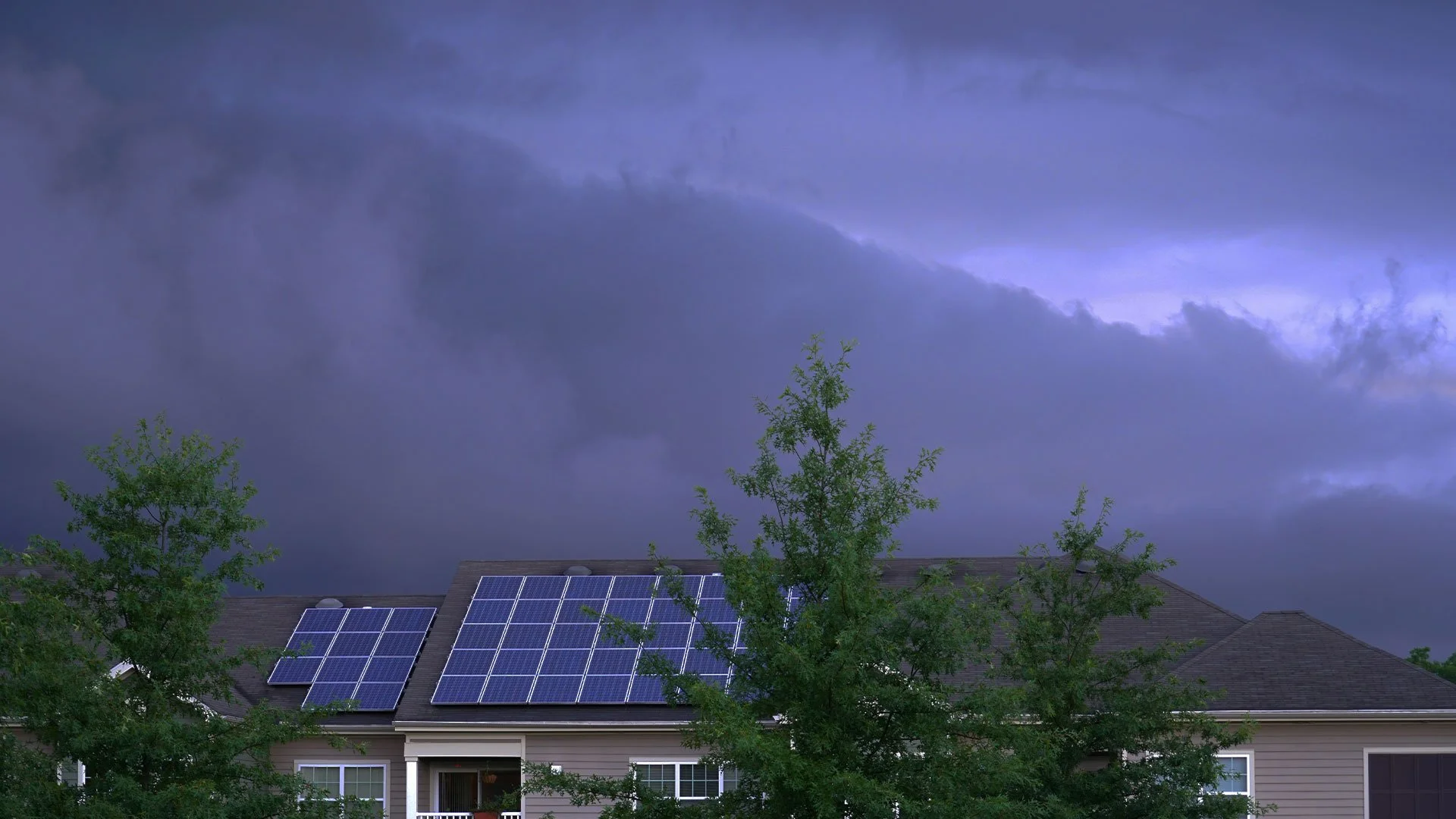
If you live in Kansas City, you already know the weather here has a mind of its own. One afternoon, it's 80 and sunny. Next, you're watching golf ball-sized hail bounce off your driveway while tornado sirens test your nerves.
So when homeowners here start thinking about solar installation, the first question is almost always the same: Can solar panels actually survive this kind of weather?
The short answer is yes. The longer answer is worth understanding, because the way modern panels are tested, built, and installed makes them far tougher than most people expect.
HOW SOLAR PANELS ARE TESTED FOR SEVERE WEATHER
Solar panels don't just show up on your roof and hope for the best. Every panel that reaches the market must meet rigorous testing standards set by organizations such as the International Electrotechnical Commission (IEC) and Underwriters Laboratories (UL).
Here's what that testing actually looks like:
IEC 61215 requires panels to withstand 25mm (roughly 1 inch) ice balls fired at 23 m/s, with 11 impacts across the panel surface. The panel passes only if it maintains structural integrity and loses less than 5% power output.
UL 61730/IEC 61730 goes further, testing panels against hailstones 1 to 3 inches in diameter at speeds up to 88.3 mph.
And the industry isn't standing still. In 2025, VDE Americas and RETC introduced the Hail Resiliency Curve (HRC) test, which fires progressively larger hailstones at panels until the glass actually fractures. This gives installers and homeowners real data on a panel's exact breaking point, not just a pass/fail result.
At Solar Scapes, we select panels we fully trust. We also factor in Kansas City's specific weather patterns during every project, because a system that works in theory needs to work on your roof, in our climate.
HOW PANELS HANDLE HAIL, WIND, RAIN, & TORNADOES
HAIL
Hail is the number one concern for Kansas City solar owners, and for good reason. The metro sits on the edge of the central U.S. "hail alley," and 2-inch hailstones in the KC metro area are not unheard of.
The good news: most residential solar panels use tempered glass (the same material in car windshields), and panels with standard 3.2mm glass can handle the vast majority of hail events. Premium panels with 4mm glass offer even stronger protection, showing roughly twice the hail resistance of thinner alternatives in independent testing.
The angle of your panels also matters. Roof-mounted systems installed at a tilt deflect more impact energy than a flat surface, which reduces the chance of a direct hit causing damage.
In the rare case that large hail does cause damage, most solar service calls can identify and address the issue quickly, and your homeowner's insurance typically covers the repair.
WIND
Modern solar mounting systems are engineered to handle winds up to 140 mph. The racking and anchoring techniques used in a proper installation distribute wind load across the roof structure, not just the panel mounts.
The keyword here is "proper." A system installed by experienced professionals will perform dramatically better in high winds than a rushed or underengineered setup. That's one of the reasons we take racking system selection seriously for every project, matching the system to your roof type, pitch, and wind exposure.
RAIN & FLOODING
Solar panels themselves are waterproof. Rain doesn't damage them. In fact, a good downpour acts as a free panel cleaning, washing away dust and debris that can reduce output over time.
The components that need protection are your inverter and electrical connections. At Solar Scapes, we install all electrical equipment in elevated, weather-sealed locations to prevent moisture intrusion. If you've had an electrical panel upgrade as part of your solar project, those components are held to the same weatherproofing standard.
TORNADOES
Let's be real: no roof-mounted system (or roof, for that matter) is going to survive a direct hit from a strong tornado. But the vast majority of tornado events in the Kansas City area involve high winds and peripheral debris, not a direct strike.
A well-installed solar system is no more vulnerable to tornado damage than the roof it sits on. And because our installation process is designed to protect your roof's integrity, your home stays as resilient as possible during severe weather.
For homeowners who want an extra layer of protection during any grid outage (tornado-related or otherwise), pairing solar with a battery backup or standby generator keeps your home powered even when the grid goes down.
4 WAYS TO PROTECT YOUR SOLAR INVESTMENT FROM STORM DAMAGE
Schedule an Annual Inspection: Storms loosen connections, shift panels, and cause micro-cracks that aren't visible from the ground. Small issues are easy to fix when caught early, but costly to ignore after the next severe weather event compounds the damage. Our team offers post-storm and annual solar inspection services for exactly this reason.
Verify Your Insurance Coverage: When a major hailstorm or windstorm hits, your insurance claim is the difference between a quick recovery and a financial headache. Most homeowner's policies cover rooftop solar panels, but confirm that storm and hail damage are explicitly included. Make sure your coverage reflects the full replacement value of your system, not just the depreciated amount.
Keep Trees Trimmed Around Your Array: During high winds and thunderstorms, overhanging branches become projectiles. Falling limbs can crack panels and damage wiring that would otherwise survive the storm without issue. Trimming before storm season is one of the cheapest forms of protection you can invest in.
Keep Your Panels Clean: After storms pass through, dirt, pollen, and debris can build up and mask hairline cracks caused by hail impacts or wind-driven debris. Regular solar panel cleaning keeps your system visible so damage gets spotted fast and your panels keep performing at their best.
HOW SOLAR SCAPES SUPPORTS YOU BEFORE, DURING, AND AFTER STORM SEASON
The weather is unpredictable. Your energy system shouldn't be.
It starts with how we install. Every Solar Scapes project accounts for Kansas City's specific weather risks, including wind exposure, roof structure, drainage patterns, and hail probability. We don't drop a one-size-fits-all system on your roof and move on. We design around where you live and what your home will face season after season.
When severe weather hits, our team is available for post-storm inspections to assess your system's condition and identify any issues that need attention. And because we're a Kansas City-based company, the person you're calling just drove through the same storm you did. That matters when you need fast answers and real help, not a 1-800 number routing you to someone three states away. From annual maintenance to panel removal and reinstallation for roof work, we stay with you for the life of your system.
Solar isn't a one-time purchase. It's a long-term partnership, and we treat it that way.
FREQUENTLY ASKED QUESTIONS
-
Yes. Solar panels are tested to withstand hailstones between 1 and 3 inches in diameter at speeds up to 88.3 mph under UL 61730 and IEC standards. Most Kansas City hail events fall well within the range that modern panels are built to handle.
-
In the vast majority of cases, yes. Solar panels continue to generate power through rain, clouds, and stormy weather. If a panel is cracked or damaged, it may still produce reduced output, but a professional inspection is recommended after any severe hail event. Learn more about solar performance on cloudy days.
-
Most standard homeowner's insurance policies cover rooftop solar systems under dwelling protection, including hail and wind damage. You should verify that your policy covers the full replacement cost of your system and explicitly covers storm damage.
-
Modern solar panels are warrantied for 25 to 30 years and often produce usable power well beyond that. Midwest weather, including temperature swings and storms, is accounted for in panel design and testing. Read our full guide on how long solar panels really last.
-
Start with a visual check from the ground. Look for cracked glass, displaced panels, or visible debris on the array. Then schedule a professional inspection. Hidden issues, such as microcracks in cells, can reduce performance without being visible to the naked eye.
-
A direct hit from a strong tornado can damage any structure, including solar panels. However, properly installed panels are no more vulnerable than the roof itself. For most tornado-related events in the KC area (high winds, debris, peripheral damage), a well-anchored system holds up well.
READY FOR SOLAR THAT'S BUILT FOR KANSAS CITY WEATHER?
If storms have been the one thing holding you back from going solar, let's put that concern to rest. We'll walk you through how your system is protected, what happens if something goes wrong, and how we'll be there to support you every step of the way.